

Is it a bird, is it a plane?
No, it’s a drone! Two pilots operating two surveillance drones in a systematic grid pattern covered the full extent of Motuora island to identify and map weed sites. We expect to save many hours of on-foot searching. Volunteers can use an app to navigate direct to the waypointed weed site and treat weeds as necessary.With support from the Department of Conservation, and approval to fly a drone that day, Motuora Restoration Society commissioned Island Solutions geoff@islandsolutions.com to carry out the work to document the distribution and relative abundance of invasive weed species. The image below forms part of the interim report we received from work done in June. A second day is planned for September–October 2026. This timing is selected to coincide with more favourable phenological conditions.Key: Blue - Mothplant Yellow - Boneseed Green - Woolley Nightshade Red - Gorse Purple – Pampas 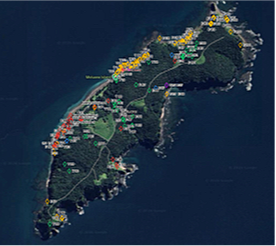
update from the AGM
The Society held its Annual General Meeting on 19th May. Nineteen attendees were welcomed in person and on Zoom. The business of receiving Chairperson’s Report and Finance Statements was done, and the meeting approved the annual subscription rate to remain at $25. Officers on your committee were bolstered with the election of new member Deborah Widdowson. Welcome Deborah, we hope you enjoy committee time as much as visits to the island with husband and children.
The meeting noted the retirement of our long-standing Honorary Treasurer, Nattu Nataraj, after twelve years of dedicated service. Nattu has done significant work for the Society, carrying out his role with the minimum of fuss but ready to react to the somewhat uneven requirements for items of expenditure. He also volunteered on many work trips to the island often bringing friends along. Thank you for your brilliant service Nattu and best wishes for many happy times with extended family and growing grandchildren.
The search for a replacement Treasurer is underway. If you’d like to hear more about the role or to recommend a suitable candidate, please get in touch with Chairperson John Stewart on email mrsadmin@motuora.org.nz
April workday
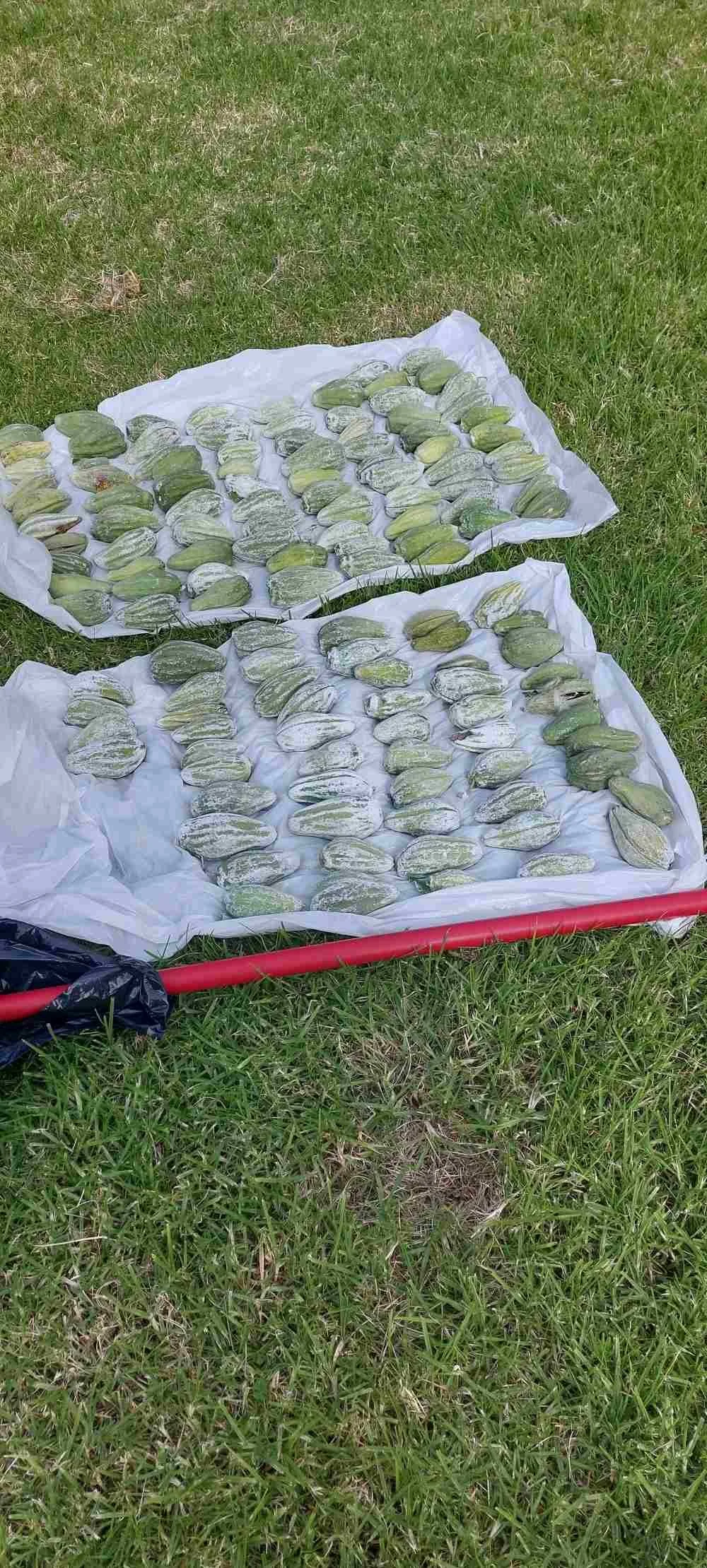
April’s workday was pushed back to 2nd May to avoid the April long weekend. A full boat load headed out from Sandspit loaded with gear and volunteers. The main work of the day was weeding and a big team set out with high-reach ‘pod-grabbers’ to seek and collect moth plant pods. Part of the haul is shown below.
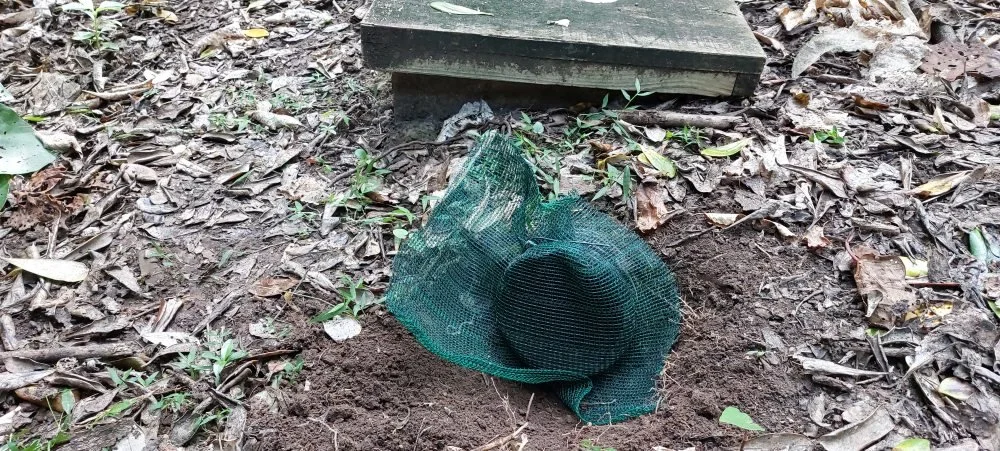
Apart from the weeders, a small team headed up to the Pycroft’s petrel colony where mesh barriers were fitted to the outside end of the entrance pipes with the hope of excluding bumble bees. Each year we find up to a dozen of the boxes have been invaded by bees. On one occasion we were unable to remove the bees before the Pycroft’s return in October and a bird was killed when it entered the box.
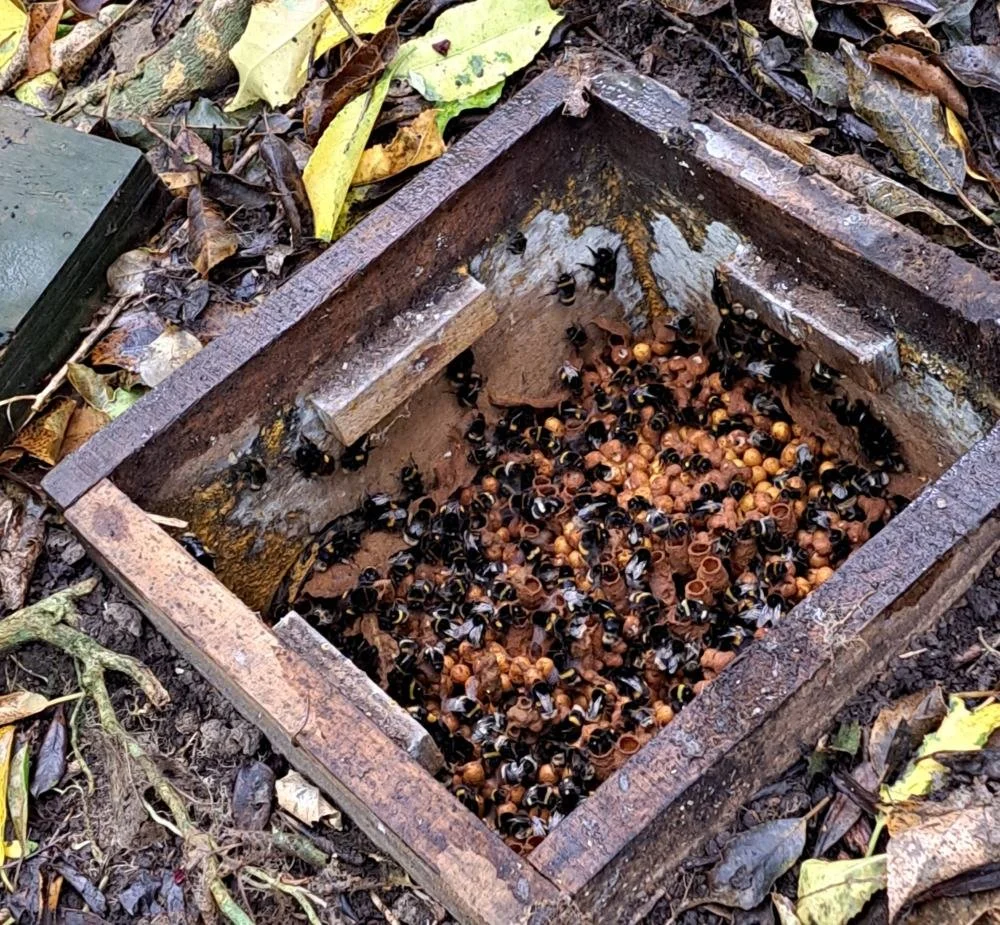
Hopefully, the new mesh barriers will exclude the bees. We’ll have to remove them before the birds return.
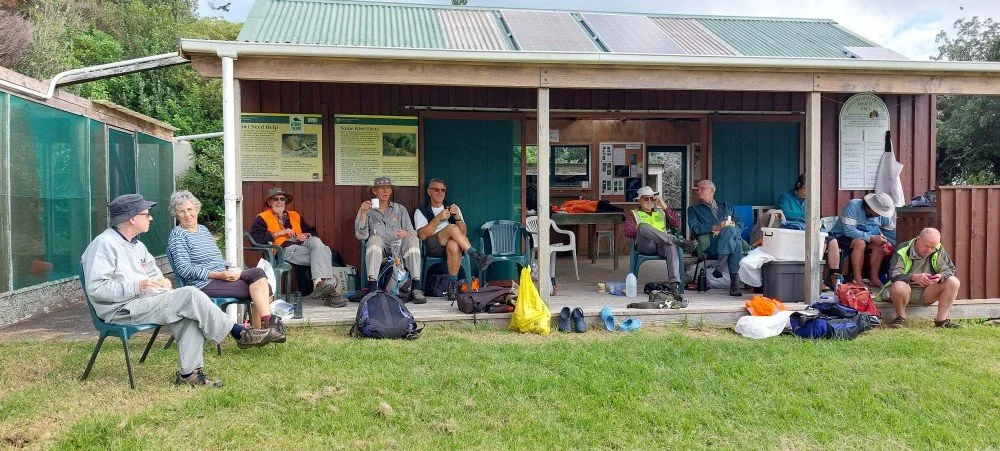
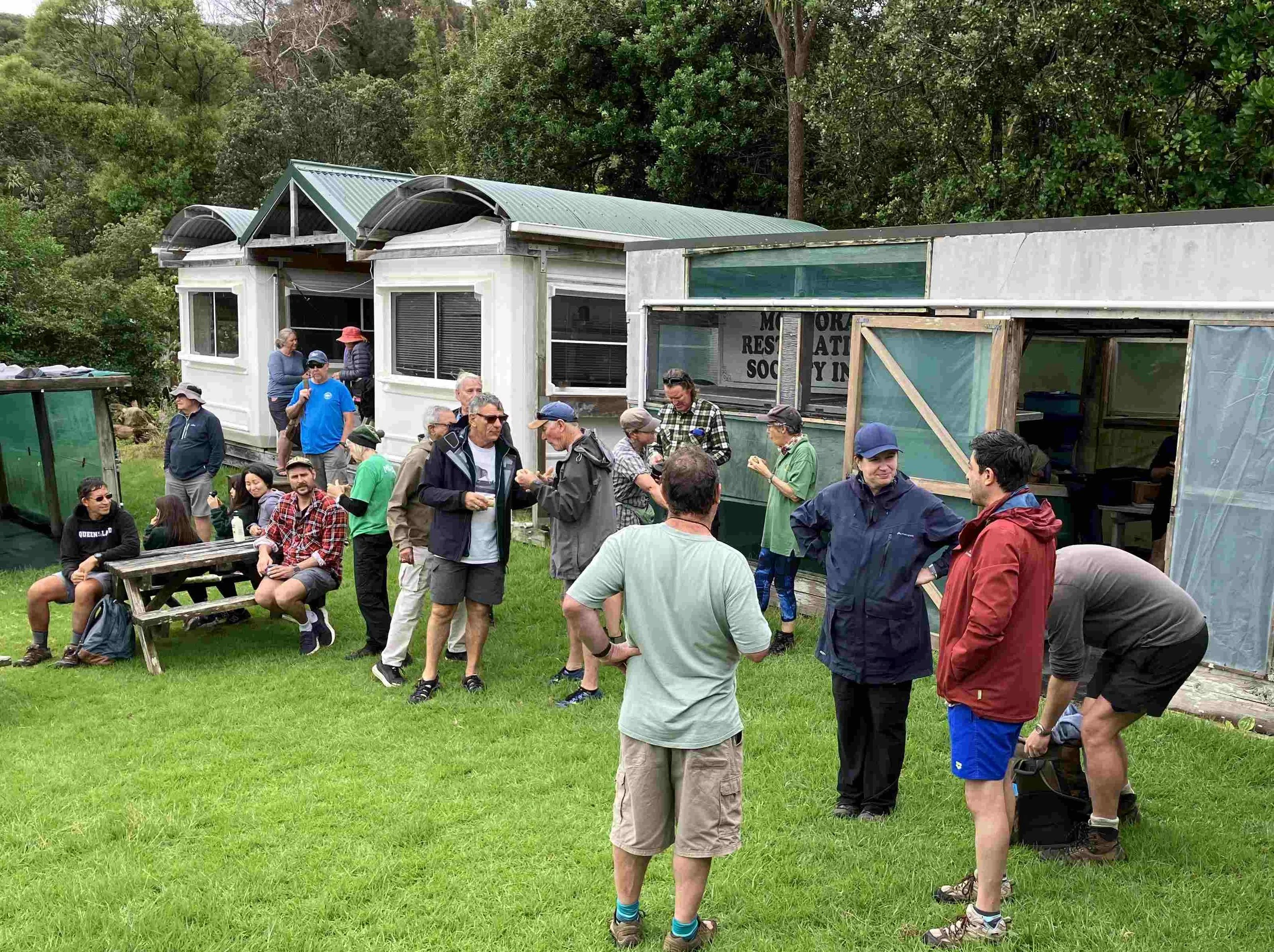
Here’s a photo of most of the volunteers having a well-earned lunch break.
2026 AGM
The 2026 Annual General Meeting will take place on Tuesday 19th May at 7:30 pm. It will be held at the Old Library Building, Pioneer Village, Silverdale. A Zoom link will be emailed to current members who may join the meeting online. A copy of the Chairperson’s Annual Report is available here.
AGENDA
1. Record those Present and Apologies
2. Minutes of the 2025 AGM
3. Matters arising from the Minutes
4. Financial Report
5. Chairperson’s Report
6. Election of Officers*
7. Subscriptions for the 2026/2027 year
8. Any other Business
* The officers of the Society comprise the Chairperson, Treasurer and Secretary and up to nine other officers. Nominations for all these positions will be accepted by mail, to be received by the Secretary at PO Box 100132 North Shore, Auckland 0745, by 12th May 2026. Nominations may also be accepted from the floor at the meeting.
Nominees must meet the qualification criteria set out in section 47 of the Incorporated Societies Act 2022 or rules 10a and 11 of the MRS Constitution on the qualification of officers.
Nominees must be financial members of the Society.
January work trip
After the recent inclement weather track clearing was a necessary task on the first trip of 2026 and the Widdowson family set to clearing foliage blocking the North Loop Track. Moth plant weeders also encountered windfall karo trees on the access track which were too big to scramble through. Undeterred, Bruce and Liz found another way in and dealt with several hundred moth plant seedlings at the known site. Although it is satisfying to know infestations are decreasing, we also know these sites need checked regularly!
Sea bird monitoring goes on all through breeding season until birds have fledged. On this visit we found 21 Pycroft’s petrel chicks and one unbanded adult alone in box 17. The chicks are still quite small, they will fledge some time in April. We’ve been following the progress of four fluttering shearwater chicks. One had already departed before we arrived but the other three well-grown chicks were banded.
Kororā/little penguins normally lay their eggs in August, but this season all the early nests failed. Some of the pairs re-laid around November and now have growing chicks. Sadly, we found dead chicks in two of the boxes but there are still at least three boxes with live chicks.
There were no dotterels to be found on the beach at Home Bay and we believe no chicks were raised to fledge this season.
The weekend monitoring team, led by Su Sinclair had a couple of interesting sightings. They recorded a ruddy turnstone at Home Bay and a kākāriki/red-crowned parakeet on the kiwi track. It’s been many years (10+ maybe) since we recorded kākāriki on the Island.

John Stewart with a fluttering shearwater chick he is about to band. One of four shearwater chicks grown to flegling stage in artificial burrows.

Karin Gouldstone with a little penguin chick.
Anniversary trip
On 15th November members and friends of Motuora celebrated the 30th anniversary of the formation of the Society. As over 80 people wanted to attend it was ideal to have the comfort of a large cat operated by Kawau Cruises to deliver people to the Island.

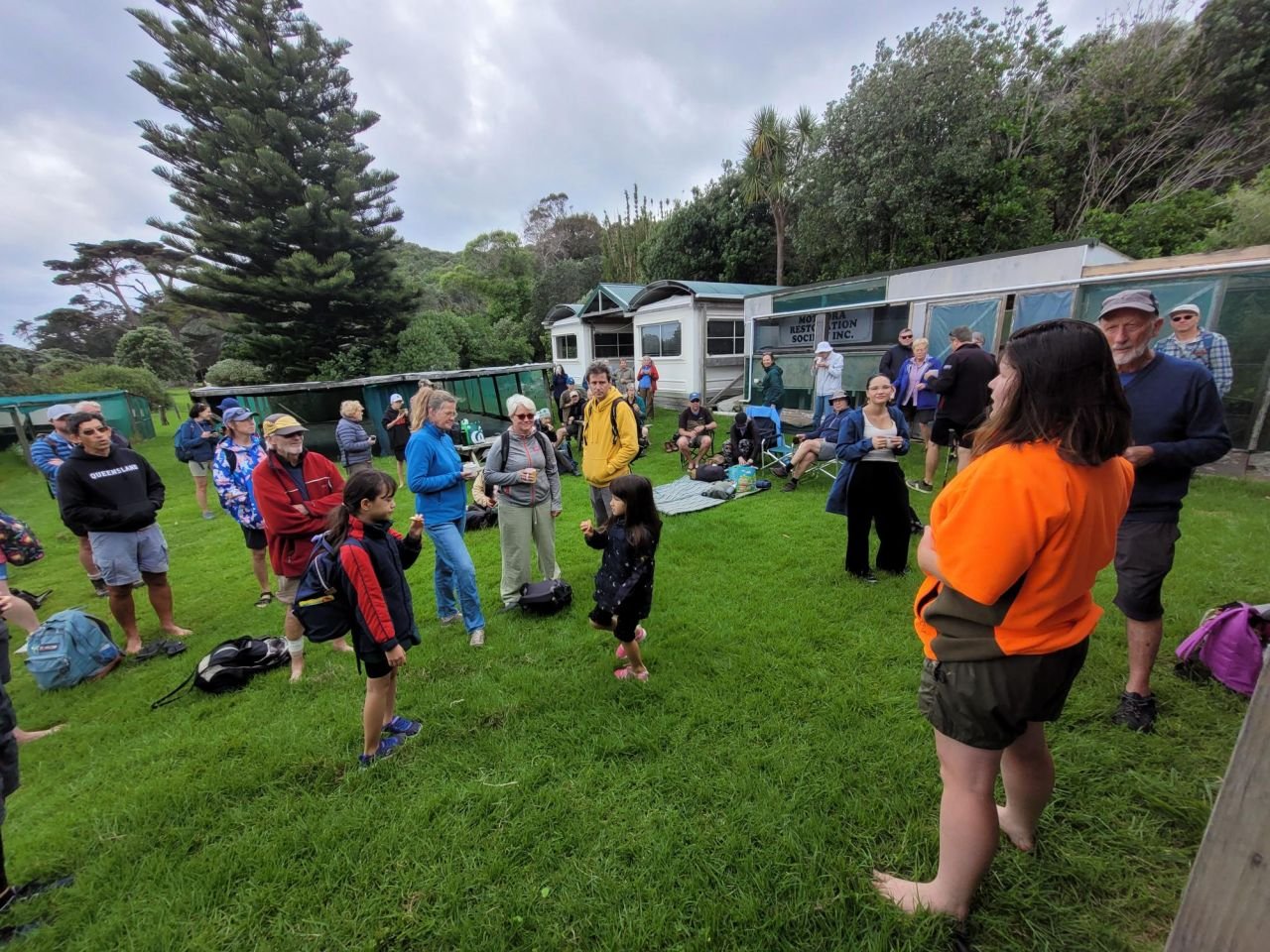
After a welcome by Kevin Hawkins and an introduction by DOC Ranger Beth Curran everyone took the opportunity to walk around to their favourite places.
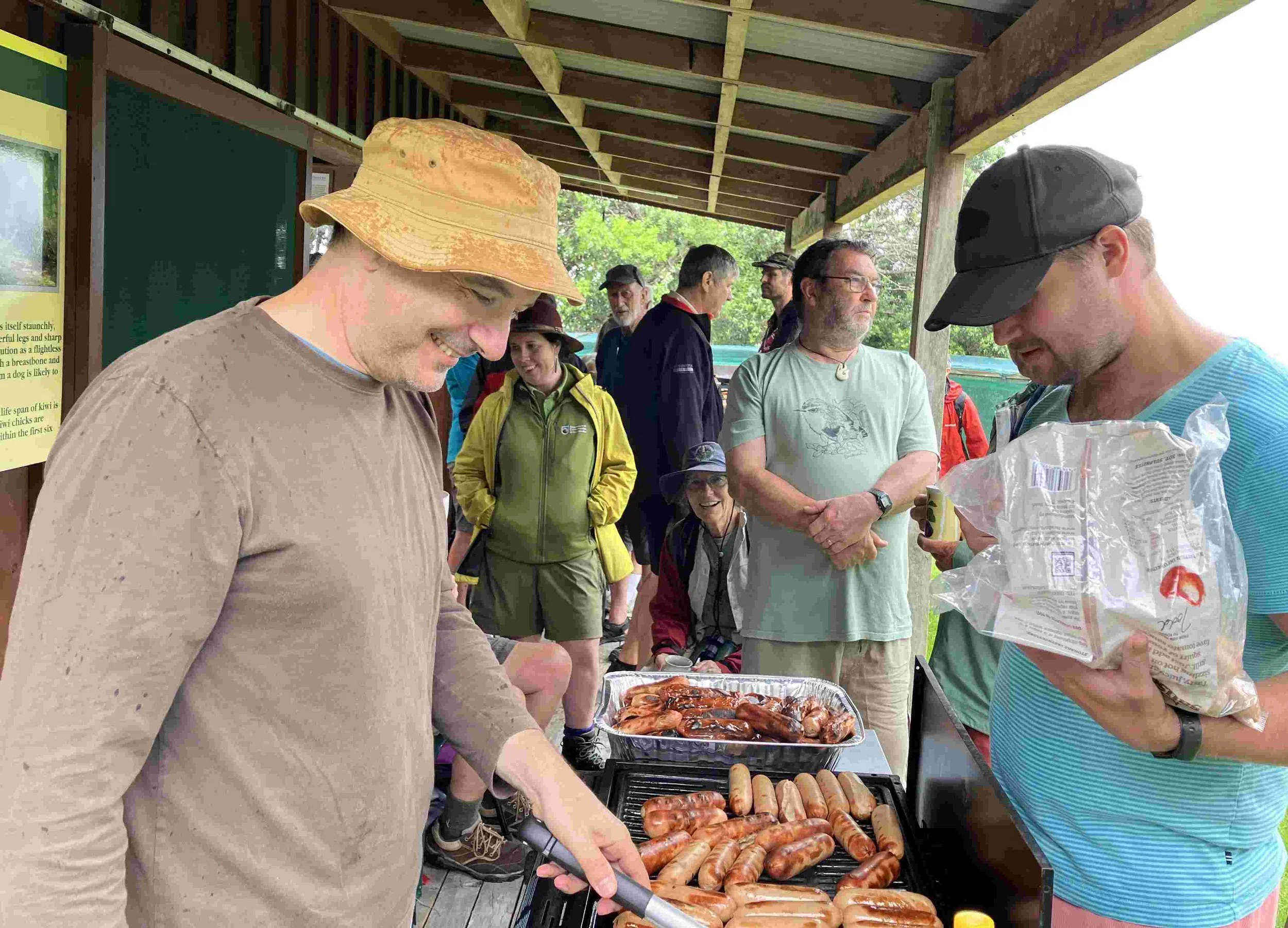
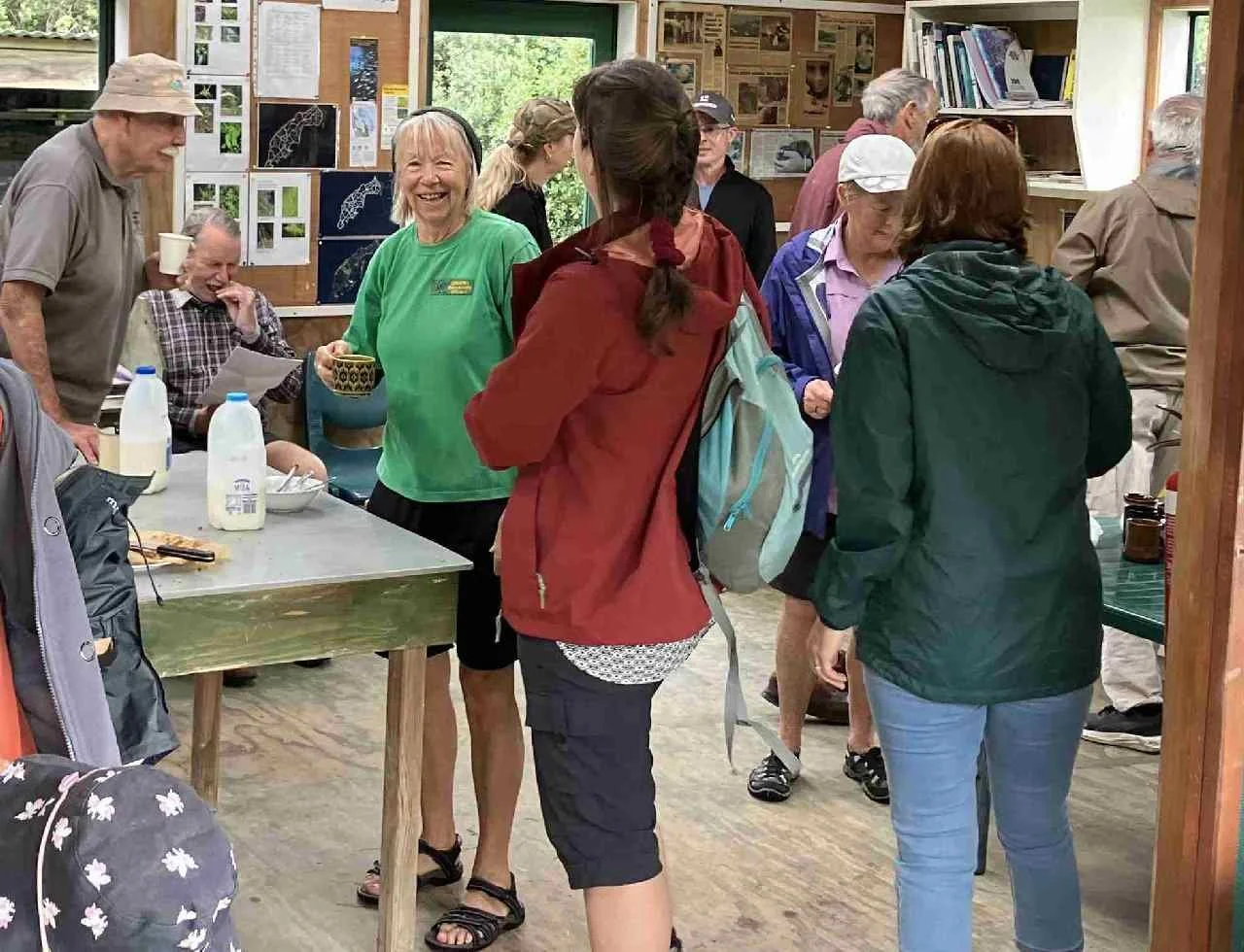
The party gathered for a sausage sizzle lunch back at the potting shed.
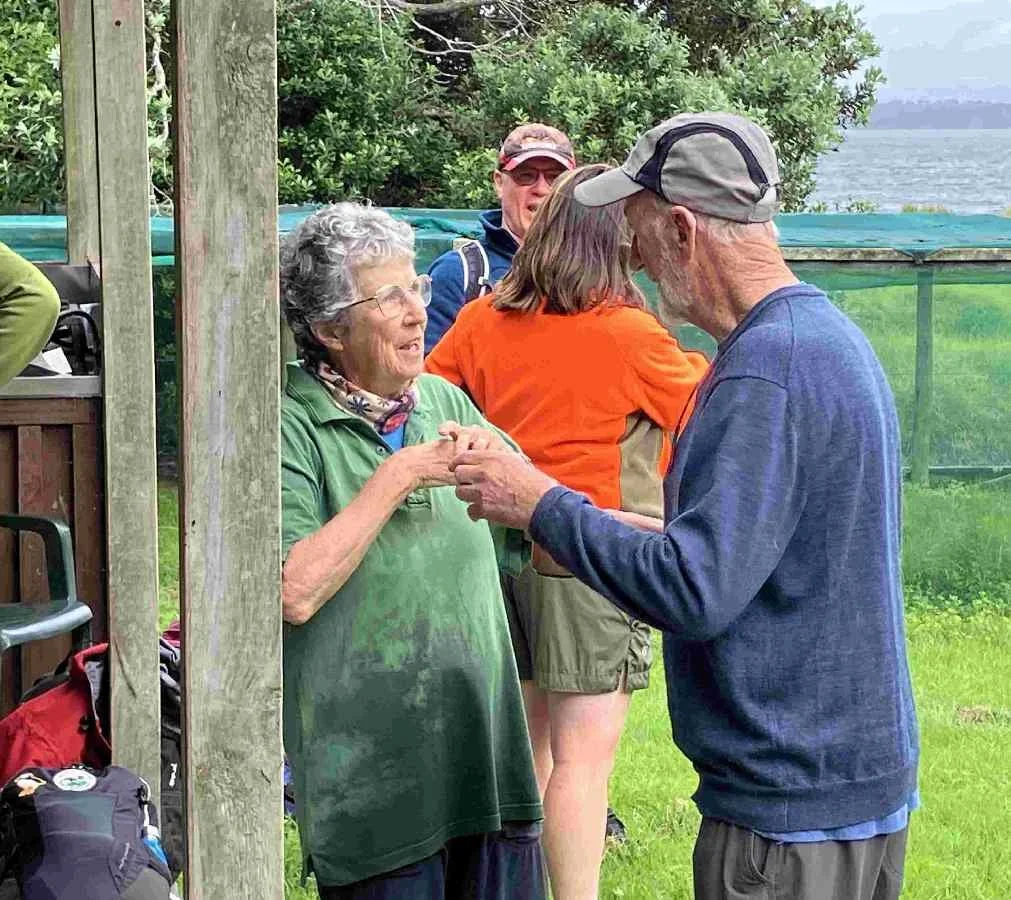
It was a day for sharing memories and reviewing years of hard work on the common vision of restoration.

Motuora over the years 2004, 2012, 2017 and 2023 showing the advance of trees over kikuyu!
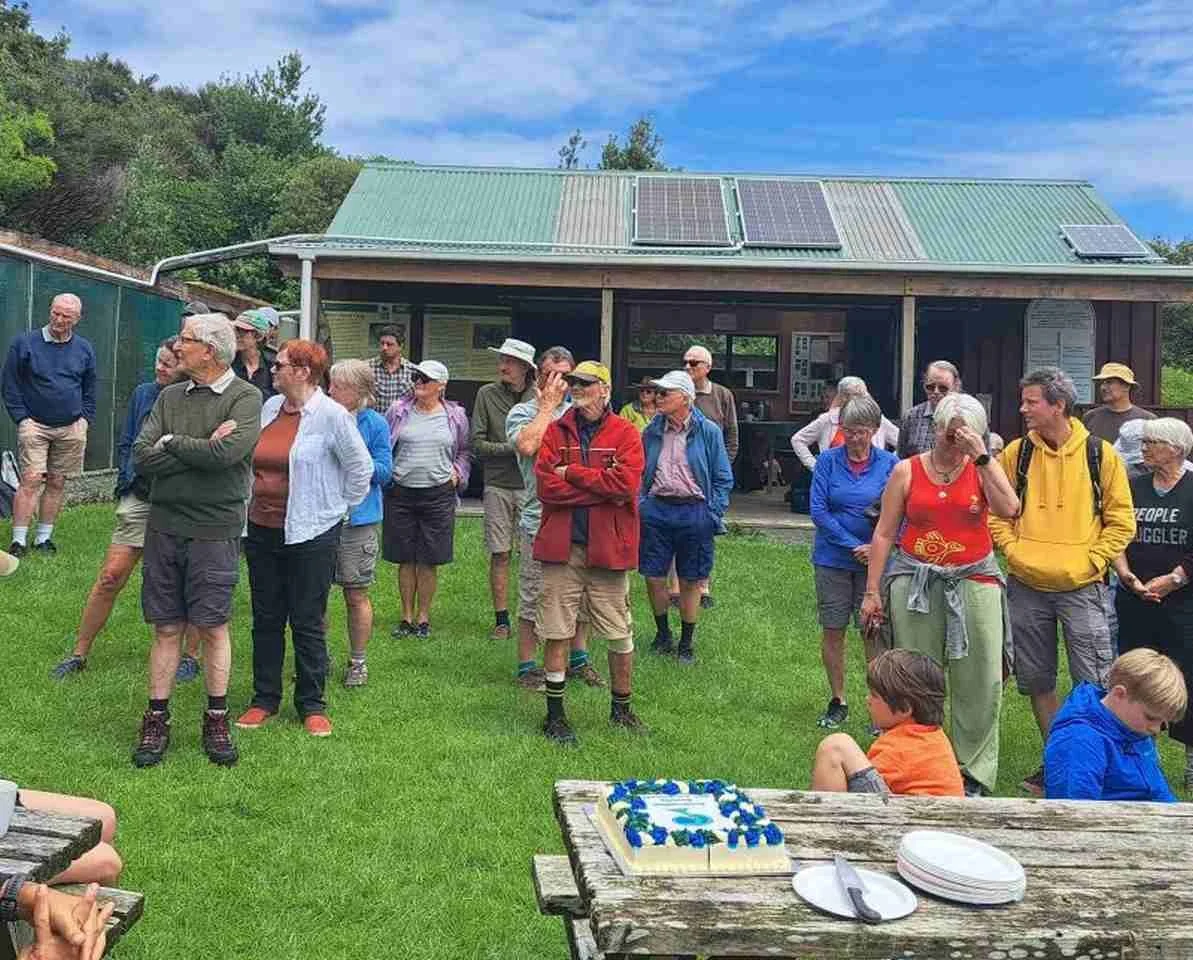
No celebration is complete without cake!
Mike Harris, original and long-time member, joined by Lynette Harris was asked to cut the cake. Mike spoke about the initial work done by members of Mid-north Forest & Bird who in the early 1990s formed the Motuora Action Group out of which Motuora Restoration Society came to life.

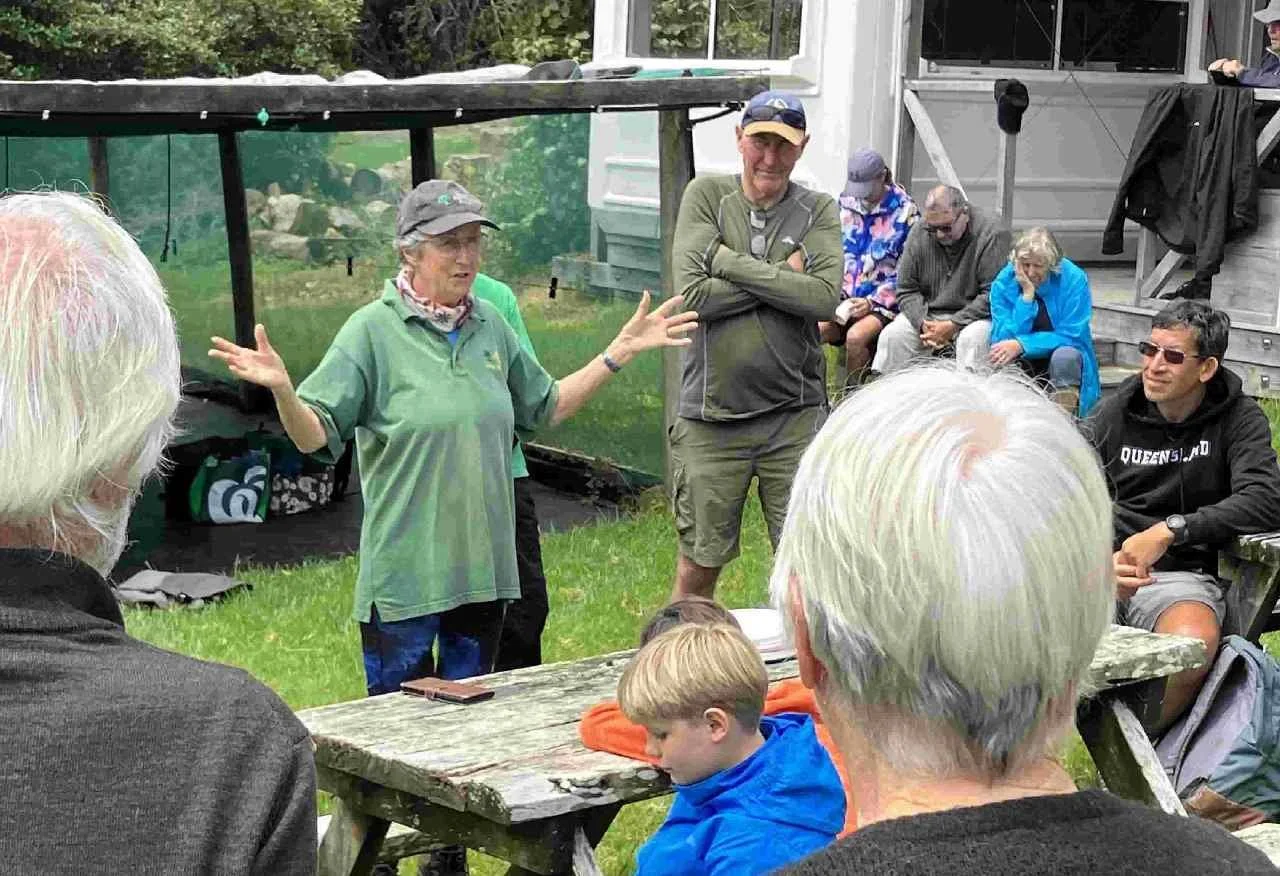
Helen Lindsay said the tremendous effort put in by many people over the years planting natives was paying off now with obvious signs of birds spreading seeds and natural regeneration. However keeping on top of weeds is vital too and that work, although not so visible is ongoing.
Pictured here the entire group just prior to boarding the ferry for the bonus of a trip around the Island to view from seaward before heading back to Sandspit. There is one notable person missing. MRS Chairperson John Stewart unfortunately could not attend the event due to a current heath condition.
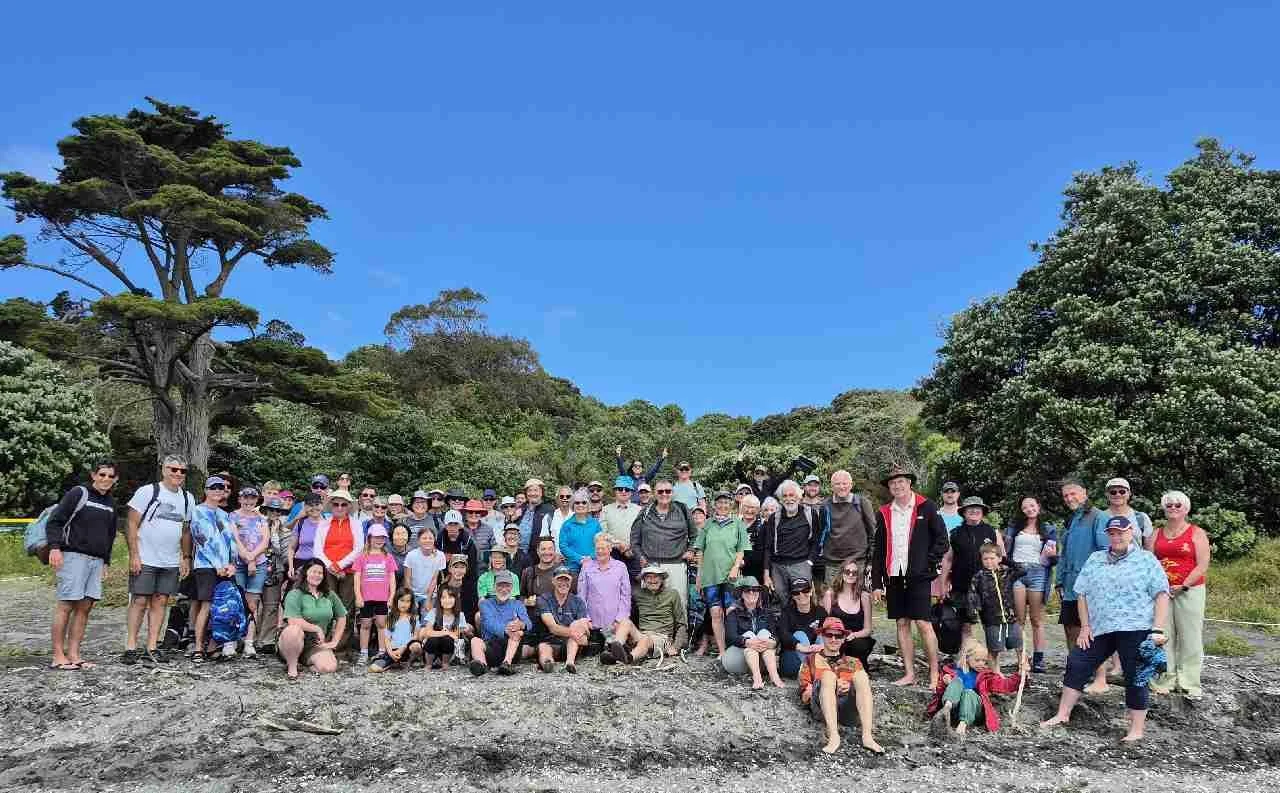
Thank you everyone for your input on the day and your ongoing support.
Bumble bees invade Pycroft’s boxes
On our September workday some of the team visited the Pycroft’s petrel site to prepare for the coming season. All 101 nestboxes were checked. The entrances were cleaned out and soil was removed from around the box lids. We were pleased to find one early bird already occupying box 42. We were not so happy to find some of the boxes containing bumble bee nests. A few years ago a newly arriving petrel was killed when it entered its box which contained a large active bumble bee nest. It’s a pity to have to remove the bees, but we can’t afford to lose any of our petrels at this stage.
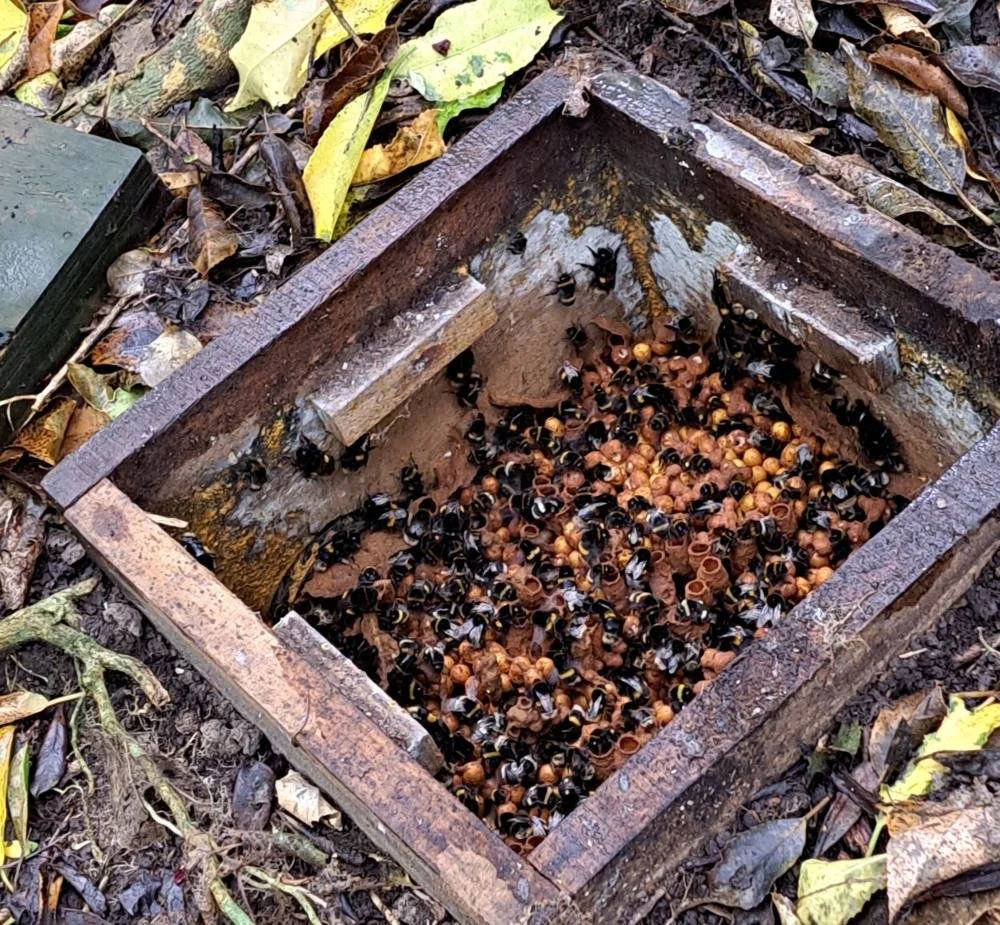
A very active bumble bee colony
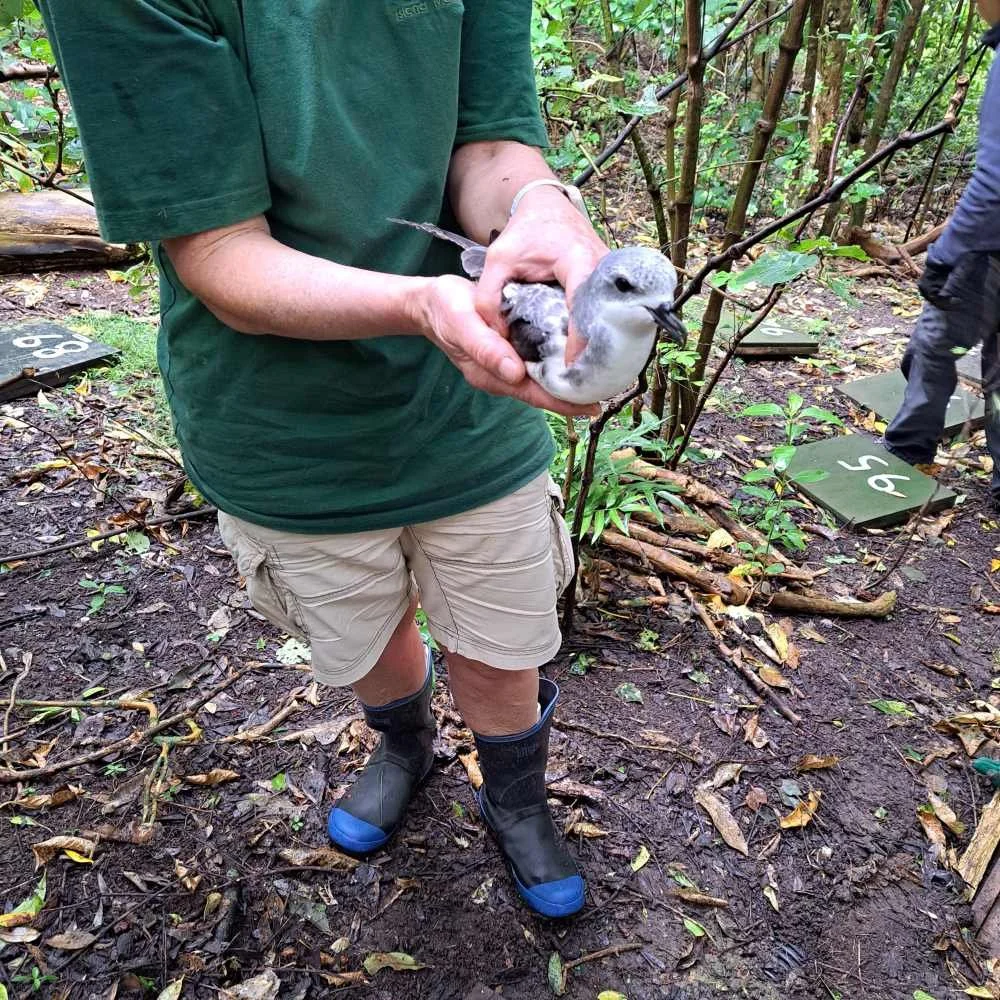
D225167 - the first returner of the season
Sight for sore eyes

View from the Lookout
Plenty of rain during winter coupled with spring warmth is good news for Motuora bush.
Sights in spring
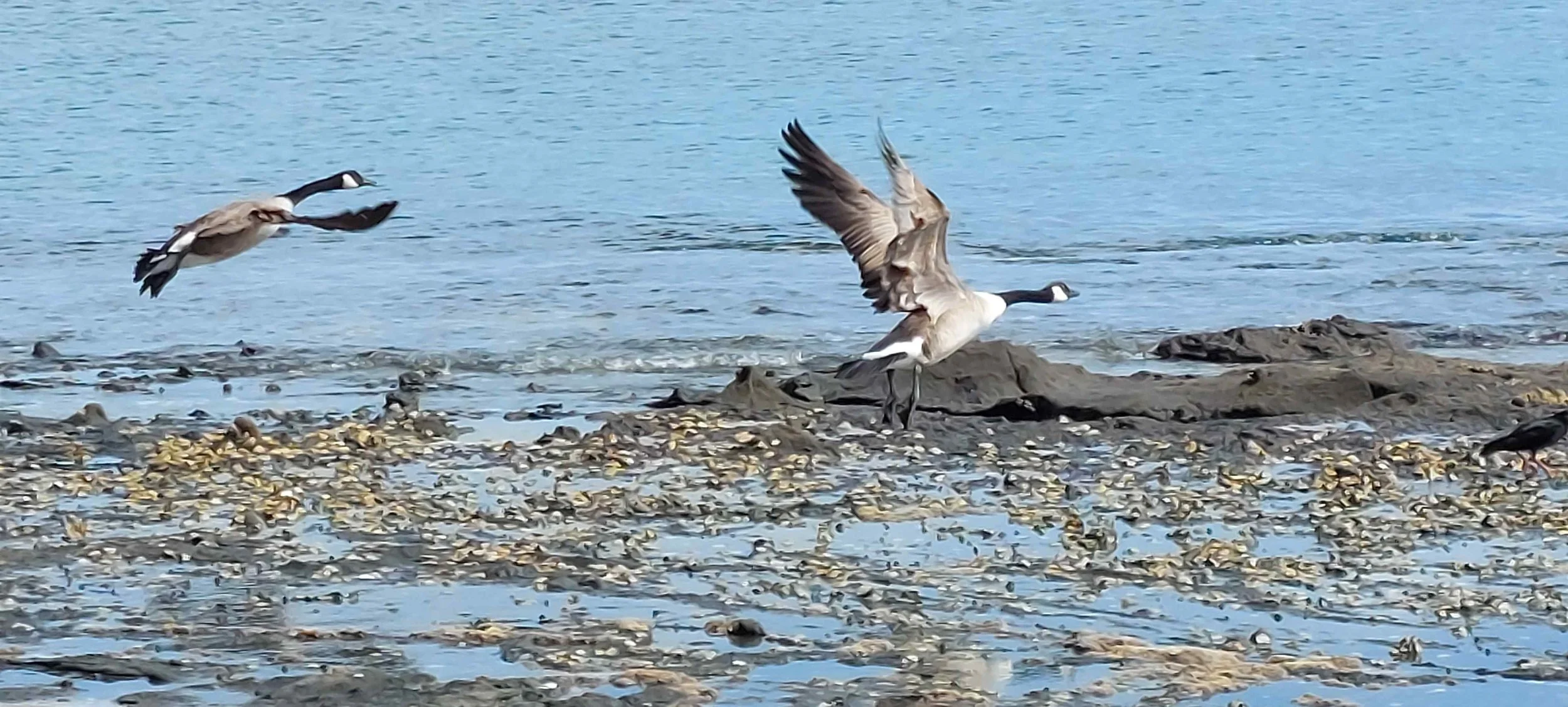
A couple of Canadian geese not usually seen on the island taking off from Home Bay.
Dotterels return to nest
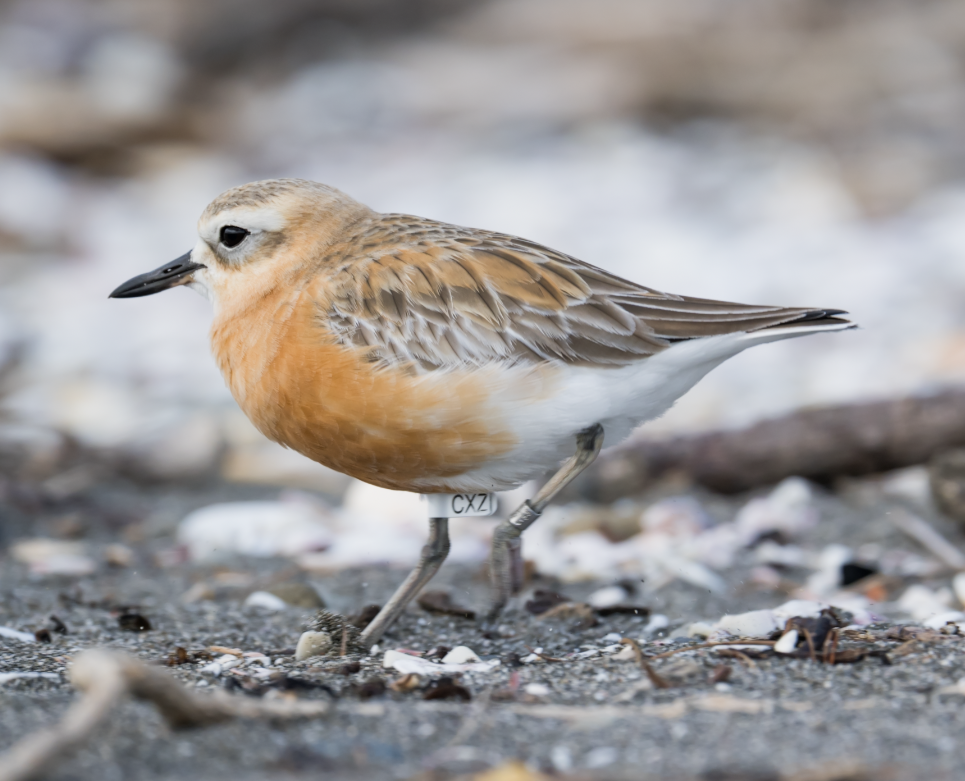
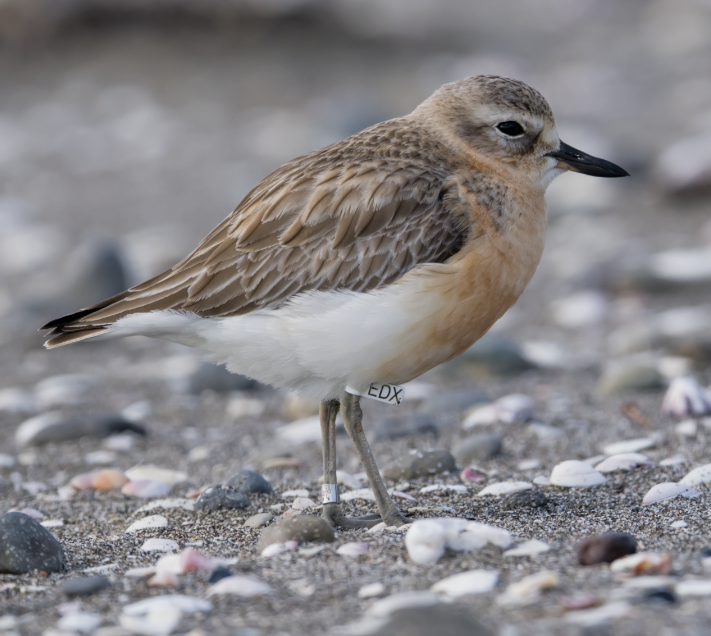
Three pairs of northern New Zealand dotterels had returned to Home Bay by Saturday 27th September and one pair already had a nest with three eggs. We placed a protective cage over the nest, which is just north of the normal landing area, and were pleased to see the female immediately return to sit on her eggs. Both birds had been caught and flagged in November 2022. The female is EDX and the male is CXZ. Alistair Owens who visited the Island on the 4th September took these great photos.
Know your weeds?
Alongside flora and fauna recovery there is the every present fight against weeds. Volunteers who want to help the Society with weed control are welcome. As in other years Helen Lindsay has put together a programme of work to be carried out during the 25-26 year.

Penguins having a good nesting season
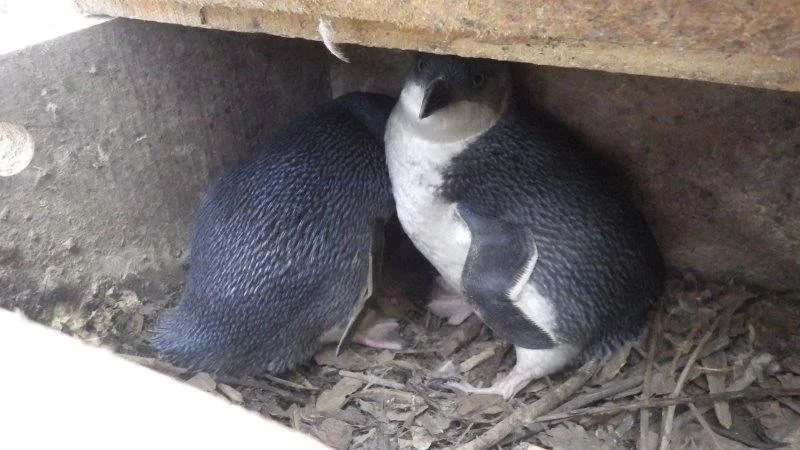
After a poor breeding season last year, our little penguins are doing much better this season. We have eleven nesting pairs and each has raised two chicks. At six weeks old the chicks are fitted with a passive transponder tag (just like the ones used for domestic pets). If the chick survives, finds a partner and chooses to nest in one of our nest boxes, the tag allows us to keep checking that it has survived and how many chicks it raises. This will help to determine the long-term future of penguins on the Island.

Karin Gouldstone holding a downy chick which has just been tagged.
Fluttering shearwaters nesting again
Fluttering shearwaters have had a successful nesting season with four pairs raising chicks in the nest boxes at the north end of the Island near the gannet site.
The image shows a chick being held for banding.
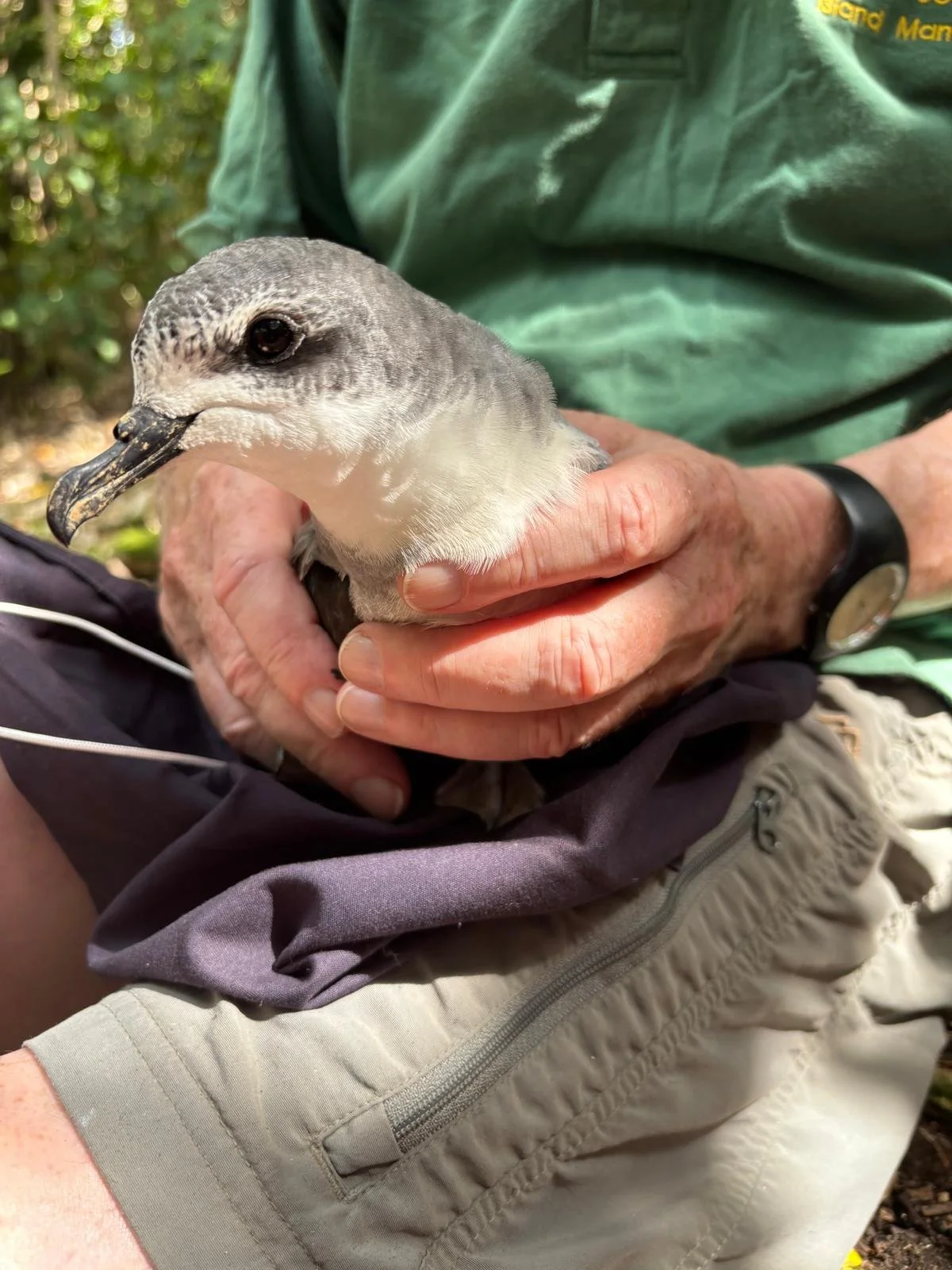
John Stewart banding a fluttering shearwater chick
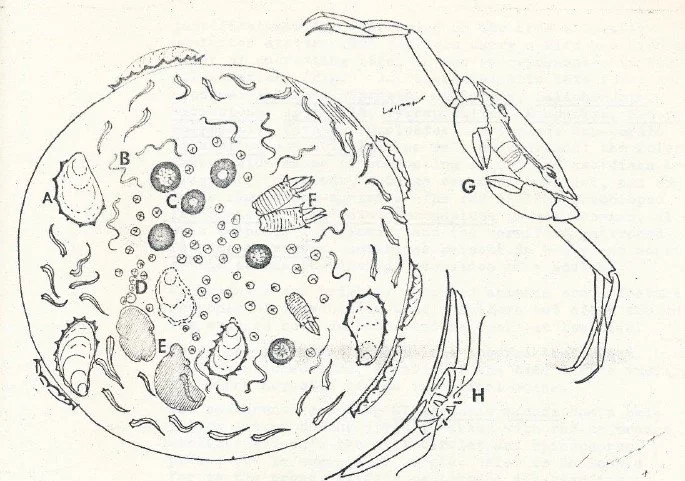
Motuora - the richest shoreline in the Hauraki Gulf?
Motuora Blog posts
Back in 1975, Professor John Morton from Auckland University, opened his report on the Motuora shoreline with the following paragraph:
That Government should take cognisance of the high ecological quality and unspoiled character of the intertidal shores of Motuora Island, which are today richer, in numbers and variety of species, than any of the mainland shores known to me in the Gulf, including the Goat Island Bay reefs where a marine reserve is currently being sought. It should be noted that pollution from land run-off or human interference and depredation has had virtually no effect on this Island.
Click here to download a copy of the 1975 report.
But what is the current condition of the shoreline? Sadly, we don’t know. But if there are any marine scientists out there who would be interested to find out, please get in touch.
Accommodation for volunteers
Motuora blog posts
Posted on 20/04/2021 by LizN
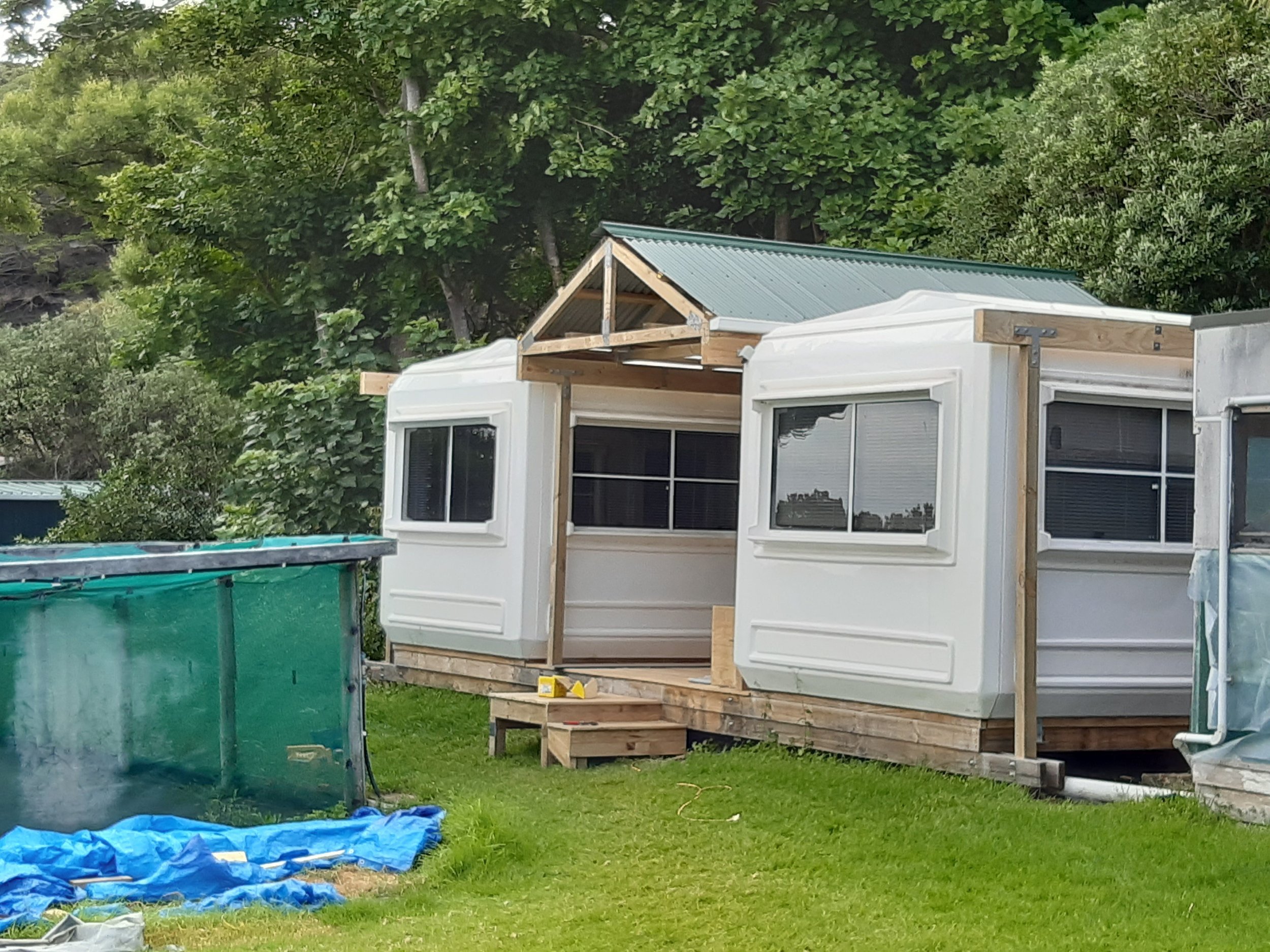
Cabins are now located where a shade house once stood and have been used extensively by visiting monitoring teams during the past months. These are basic but really snug with the convenience of solar-powered lights and charging points for phones. We had a builder erect a roof over the decked area between the pods to provide a dry place to drop wet or dirty gear and footwear. The next part of the project is to roof over each of the cabins which will protect them from harsh environment and extend the life of their construction. Rain water collection is also planned.
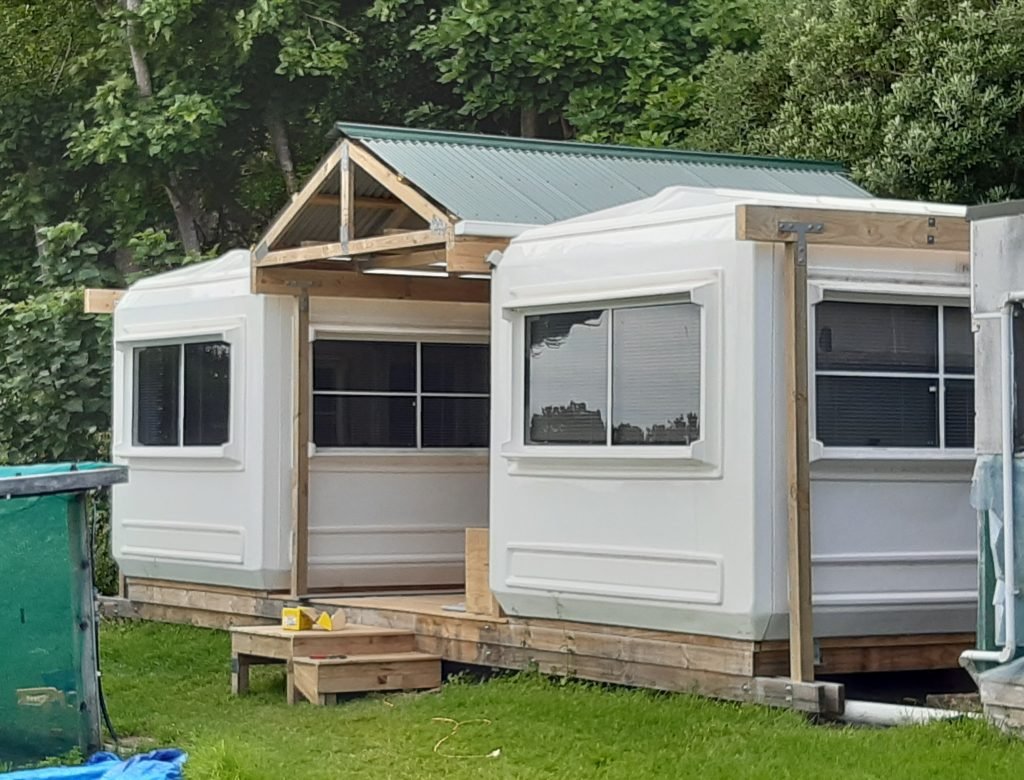
The new cabins with central deck and steps